I Think It’s Brave (And I Know You’re Tired)
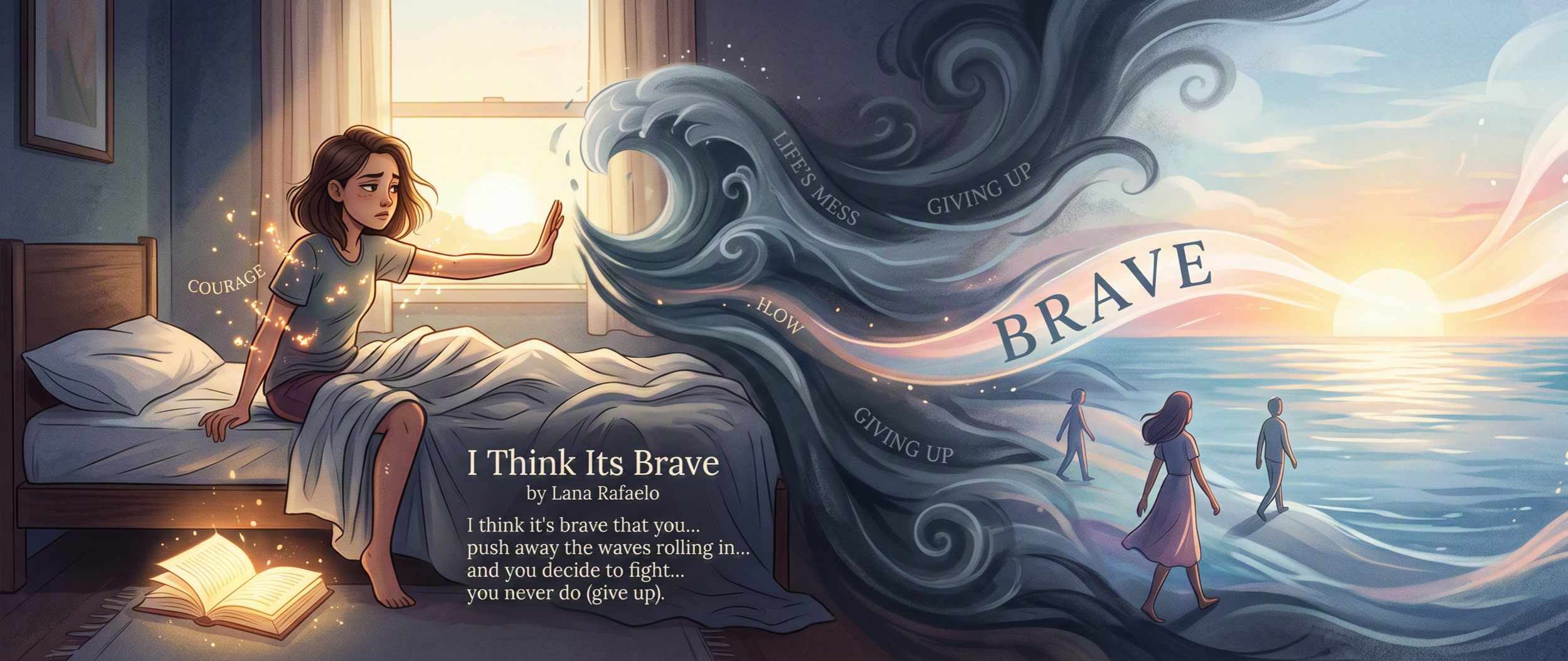
A few days ago, I realized it had been exactly half a year since I updated this website or reached out to my community. My immediate internal critic—the one I call Scamp—started screaming at me about consistency, failure, and letting people down.
But then I took a look around. I looked at my friends, my neighbors, the people in my online communities, and the emails hitting my inbox.
Nobody is skating through right now. Everyone is dealing with something.
I know people who are staring down a fresh, terrifying medical diagnosis, trying to learn a whole new language of jargon while their hands shake. I know people who are stepping over the threshold into retirement and experiencing a bizarre, unexpected grief for the identity they left behind. I know women going back to work after raising children, feeling like strangers in their own lives. I know people who are watching their lifelong dreams finally materialize right in front of them, only to realize that getting what you always wanted is its own specific brand of scary.
We are a society drowning in invisible transitions.
And yet, the standard, glossy cultural advice we get is utterly insulting. “Just meditate and be grateful.” “Take a deep breath and go for a walk.”
Let’s call that what it is: unhelpful pandering. When your bones ache for a rest and your soul is fundamentally weary, a brisk walk around the block isn’t going to fix the blueprint of your life.
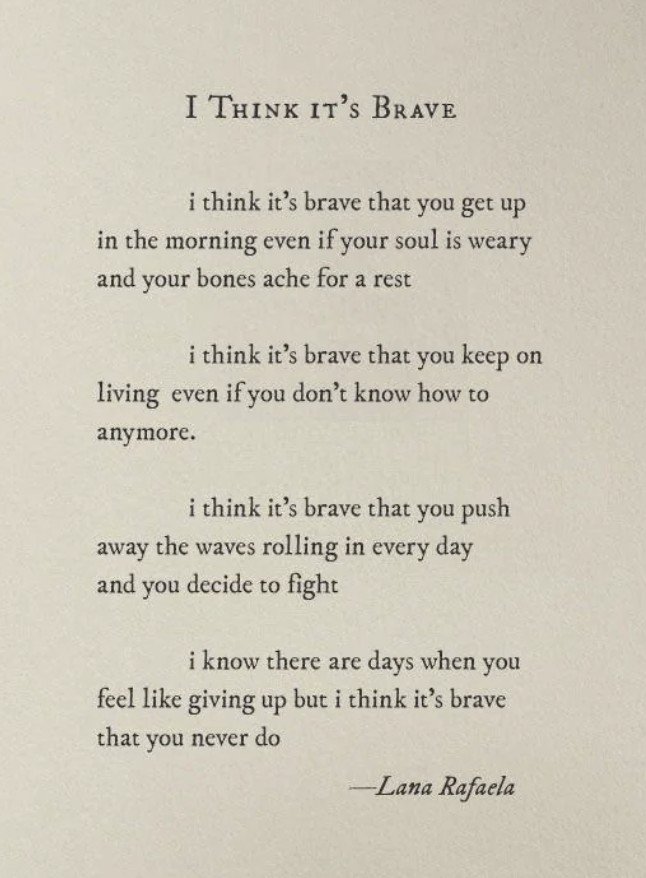
When I was in my Resistance to Aging class navigating my own chaotic brain during Savasana, the instructor, Joanne Anger, read this piece by Lana Rafaela:
Read that third stanza again. You push away the waves rolling in every day and you decide to fight.
That is what bravery actually looks like. It isn't a cinematic moment on a stage with a microphone. It is the gritty, unglamorous, invisible decision to put both feet on the floor when you don't know how to do life anymore.
Pedram Shojai, who wrote The Urban Monk—a podcast I am leaning on —talks about life in terms of energy triage. He teaches that we cannot control the weather or the waves, but we can control where we store our power. The Monk mindset isn't about pretending the storm isn't happening; it's about looking at the chaos and deciding, “I am going to survive this hour. Then I’ll figure out the next.”
When I heard the words "You have cancer," I didn't have a map. I oscillated between feeling like a victim and feeling like a warrior. But the moment I stopped trying to perform "perfect positivity" and just acknowledged the raw, unfiltered honesty of the pain, everything changed. I gave myself permission to feel it all.
If you are currently sitting in the dark, wondering how you're going to handle the move, the relationship transition, the scan results, or the sheer weight of your own thoughts—hear me on this:
You don't need to have it all figured out today. You don't need to put on a show for your support team or your family. You just have to be brave enough to show up for the next five minutes.
You are pushing away waves that nobody else can see, and the fact that you are still here, reading this, means you are winning.
You’ve got this. Hell yeah, you do.
Are you currently navigating a life transition that feels a little too bonkers to handle alone? Let’s stop pretending we have it all together. Drop a comment below, or reach out to me on the Contact page. Let me know what wave you're pushing away today. Let’s be brave together.
Stay Bonkers.
